
The Font
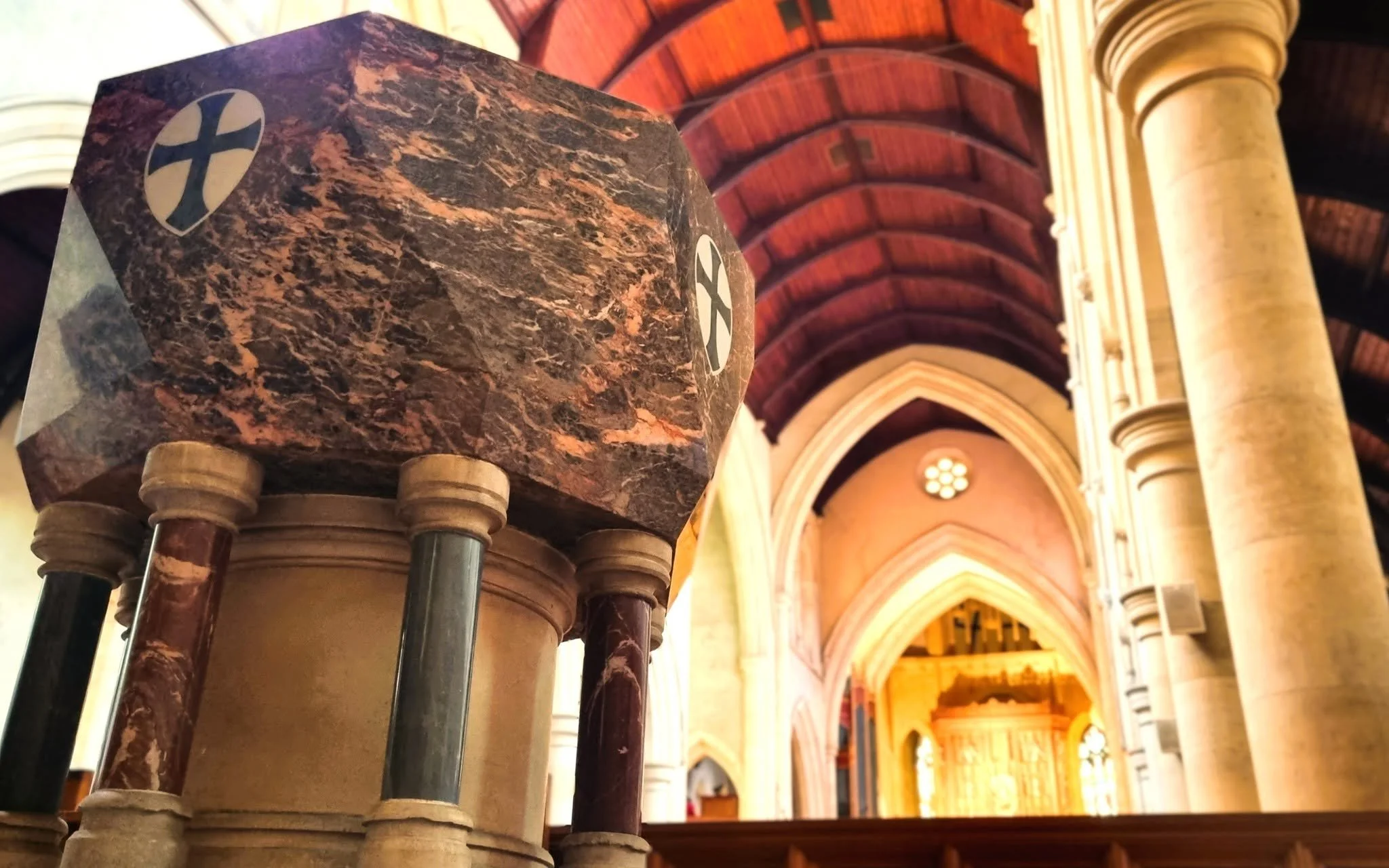
The Font is the large brown-pink marble bowl located close to the front door. The word comes from the Latin word fons meaning “a spring of water.”
Every church has a font where people are baptised or ‘christened’ as they begin their life of faith in God and join the church community. Baptism by the pouring of water over a person is a symbolic washing where the person (infant or adult) is ritually washed clean as they begin their new life with God.
The Font was designed by William Butterfield, whose architectural plans formed the basis of the final design of the cathedral. It was given in 1877 by the Sunday School children of Adelaide.
The Font in St Peter’s Cathedral is octagonal in shape. In a normal week there are only seven days. But to break out of the ordinary (as Jesus did in the resurrection) there is an everlasting eighth day. Eight-sided fonts recall the eighth day, symbolising the new creation ushered in by Christ’s resurrection.
The bowl is made of spangled pink Plymouth marble from the area around Devon in England, while the decorative panels and shields are made of white marble from the island of Iona or the island of Skye. The cross within the white shields is inlaid Plymouth black marble. The octagonal base is made of sandstone.
The location of the Font just inside the door is significant. Here people start their new life of faith, and once they have been baptised, they join the rest of the baptised people in the pews, together playing their part in the ongoing life of the congregation here at St Peter’s Cathedral.
When people who have been baptised enter the Cathedral, the Font reminds them of their baptism, even if they can’t remember the event, especially when they were baptised as infants. It reminds them that they are in a special relationship with God and that relationship was symbolised and sealed at their baptism. They are a “child of God, and an inheritor of the kingdom of heaven” as the Baptism liturgy says, and have been received into the congregation of the Church. For the rest of their lives they are to live God’s life in their lives as faithful members of the Church.