
3. Nave and Clerestory Windows
THE NAVE WINDOWS
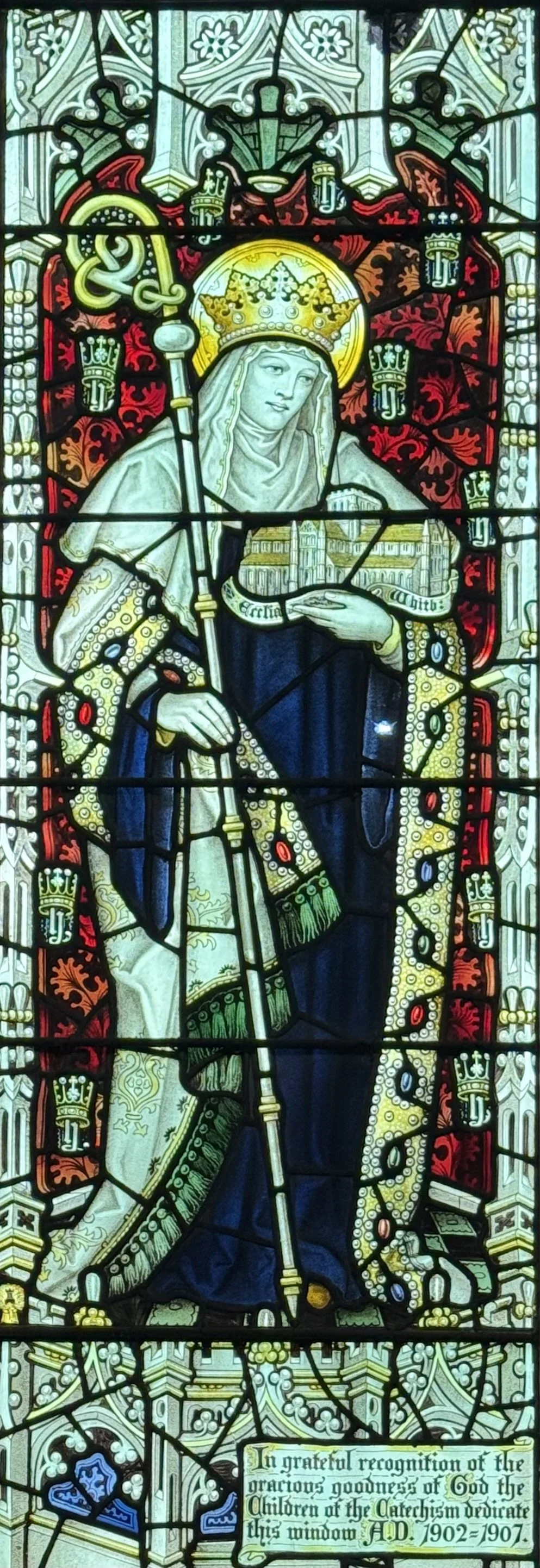
These are the lower windows of the cathedral on the side aisles near the pews in the central part of the Cathedral, which is called the Nave. All except one of these stained-glass windows were made by the English firm of Charles Kempe between 1898 and 1910, and are in a mediaeval style.
The sequence of windows was proposed by the second Bishop of Adelaide, Bishop Kennion, and were intended to depict holy and heroic figures in the history of the English church, from St Augustine of Canterbury (6th century) and St Columba of Iona (7th century) to the 18th century martyr-bishop John Coleridge Patteson, who was killed while engaged in missionary work in the Solomon Islands in 1871 aged 44.
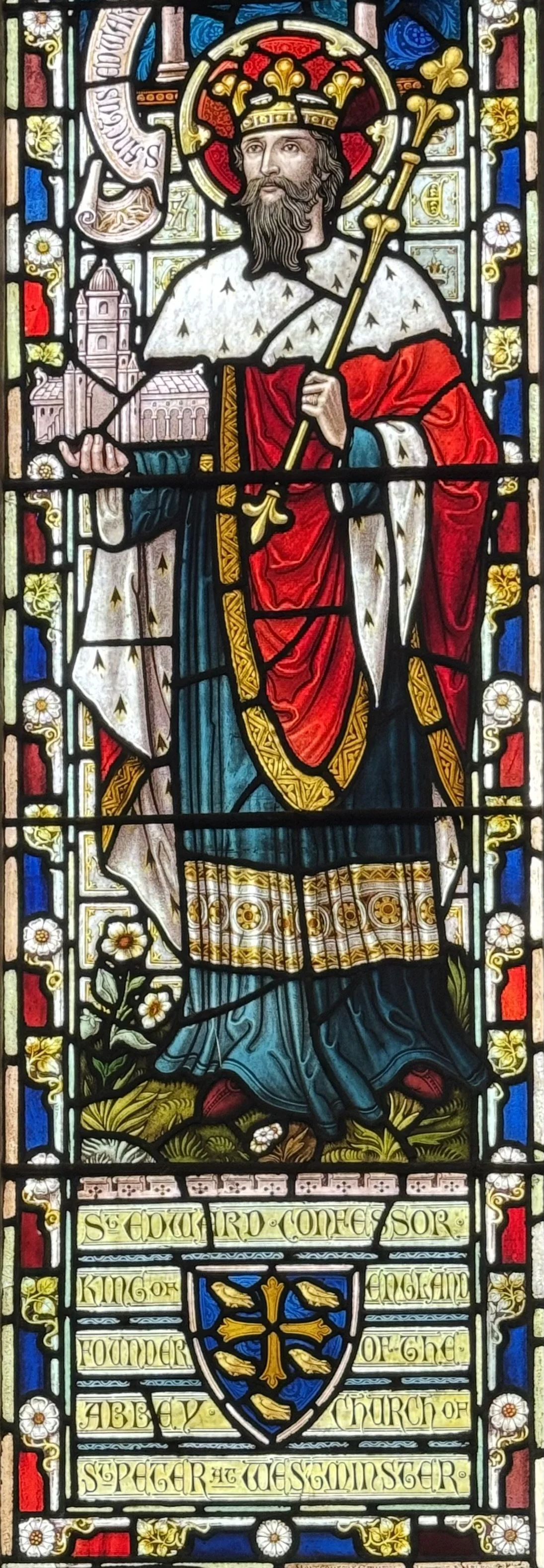
As we reflect on these windows and learn about the people depicted in them, we are helped to live more devout lives as a result of thinking about their life stories and their examples of Christian faithfulness. A closer examination of the colourful window that depicts St Edward the Confessor (the middle window on the left hand side as you look towards the Altar) repays the effort. In his left arm he is shown holding the model of a building, Westminster Abbey. It reminds us that it was his vision that led to the founding of Westminster Abbey in London. This window is one of only two in the Cathedral to have been made in Adelaide, by the firm of Montgomery and Grimbly which also made the Rose Window.
The last of the Nave windows to be installed, in 1910, depicts the first Bishop of Adelaide, Augustus Short. This window is located closest to the Font.
THE CLERESTORY WINDOWS
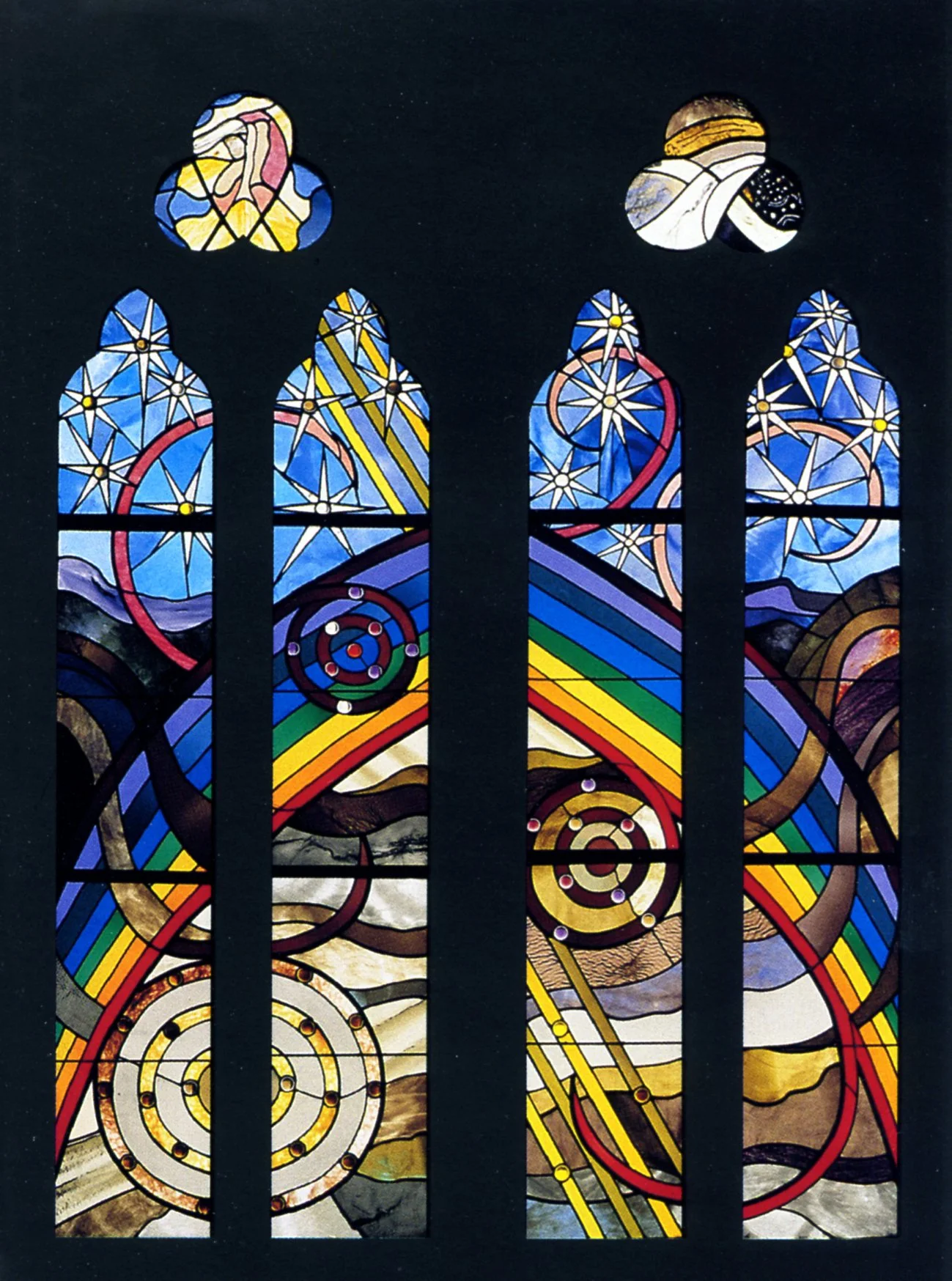
The clerestory is the upper space of the nave. These windows were designed, made and installed by Adelaide artist Cedar Prest between 1991 and 1993. They are inspired by the history of South Australia, the creation stories of its indigenous peoples, the natural environment, the cultivation of the land, as well as by the physical and spiritual journeys of its peoples. These windows illustrate and celebrate the hope and vision that underpinned the development of the state.
The third window in the clerestory on the lectern side of the aisle contains four lancets. A lancet window is a tall, narrow window with a pointed arch at its top. This window illustrates the rigours faced by the settlers in the new land, a land ravaged by bushfire and flood. In the left lancet smoke rises from an incinerated bush; in the right lancet, overhead clouds and lightning threaten further rain. (See Noah releasing the dove in the biblical flood in the right-hand trefoil at the top of the right-hand side lancets). In contrast, at the bottom of the lancets we see hope and new life – seeds sprout deep in the earth, tiny native plants emerge from the fire-cracked carapaces of woody fruits. It is a window about death and resurrection, a window where South Australian rural experience is juxtaposed with Christian teaching about new life.