
8. The Pulpit and Choir
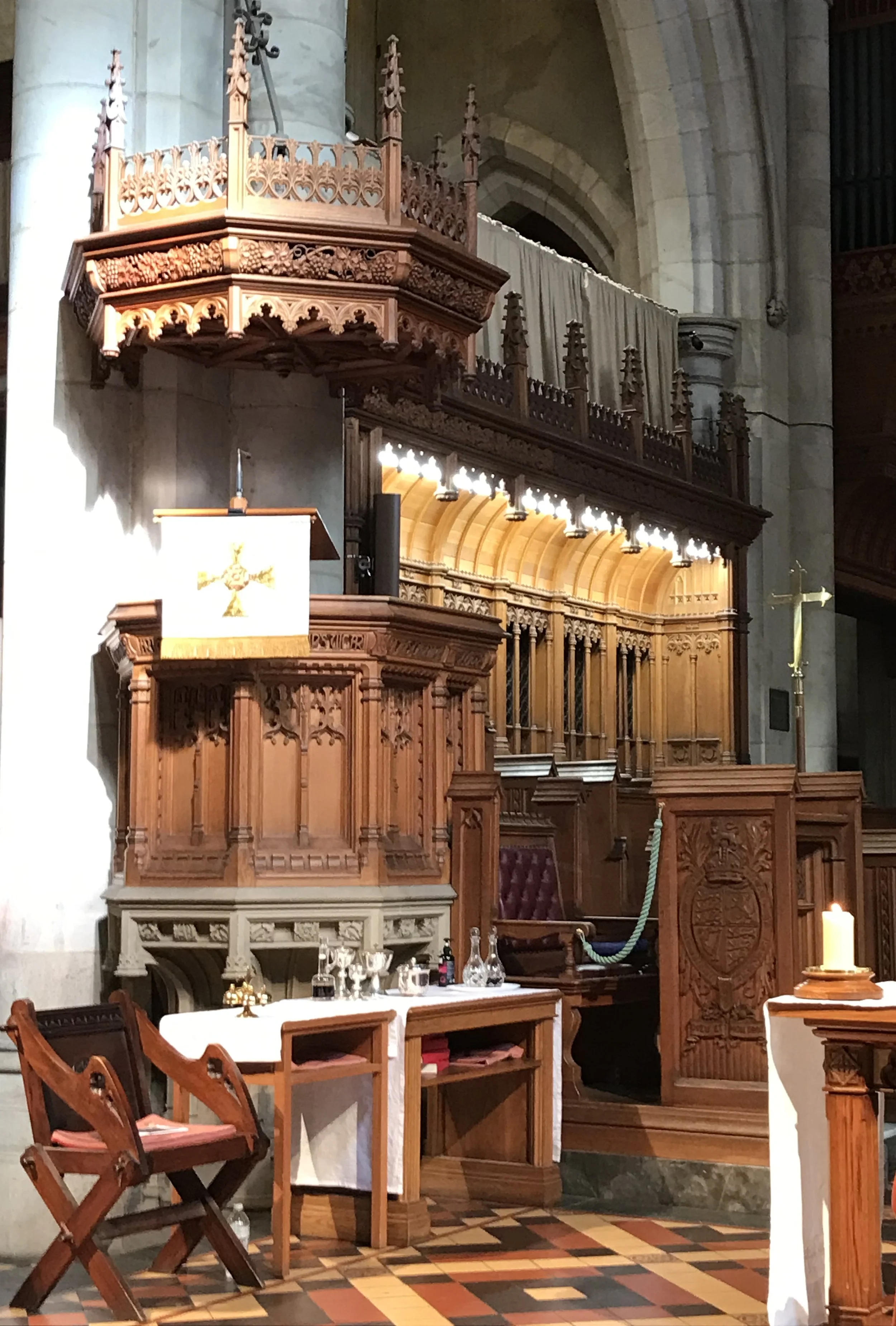
To the left of the Nave Altar is the pulpit. This is the place where sermons are preached. The pulpit is made of English oak, carved in Adelaide by Norman, Turner and Nottage. It was designed by Walter Bagot, the Cathedral architect from 1907-1945 and is a memorial to Canon Dr Arthur Dendy who was Precentor and Bishop’s Vicar from 1878 to 1890.
The beautiful canopy above the pulpit, carved of English Oak, was also designed by Walter Bagot and carved by Norman, Turner and Nottage. It was given by Sir Langdon Bonython in memory of his wife who died in 1924.
The Choir
The Choir refers to those seats and stalls where the choristers sit, and from where they lead the singing at Sunday worship.
The back row of the Choir Stalls on either side are reserved for the Canons of the Diocese - senior priests and lay people who are appointed in recognition of their service to the Church, or their commitment to special ministries - and the Archdeacons, senior priests to whom the Bishop delegates special responsibilities.
(The word Canon is derived from the Greek word κανών, a “measuring rod or rule.” Archdeacon combines the words αρχι-, meaning “chief” or “principal” and διάκονος meaning “servant of the church” or “religious official”.)
As part of the choir, and next to the lectern, you will also see the ornate seat with a canopy which is reserved for the Dean. Opposite the Dean’s stall is the Precentor’s stall that bears the Coat of Arms of St Peter. Note the keys are inverted.
The stalls are all made of English oak, carved in Adelaide by Noman, Turner and Nottage. They were also given by Sir Langdon Bonython in memory of his late wife.
The stained-glass windows in the Choir were designed by Cedar Prest, a contemporary South Australian stained-glass artist. The windows echo in vibrant colour the activities that go on beneath them. On the lectern side (“cantoris”) the choristers, in the cathedral’s former robes of blue, sing the offices, while on the pulpit side (“decani”), tuxedoed and T-shirted musicians glorify God on a variety of instruments including a bass drum sporting the symbol of St Peter.