
Our History

The Cathedral is properly the parish church of the whole diocese; all have equal right to enter and worship there.
“It is indeed no little joy to me to stand among you this night 'in the courts of the Lord's house, to praise the Lord.' If by His grace this Cathedral may be the means of its redeeming you by its very stateliness; that the house of God should rise pre-eminent above the dwellings of men; that in this world of sin and care, of sorrow, disease, and death, it offers a refuge for weary souls, then have I not laboured in vain, nor spent in vain the offerings of myself and others, in raising this noble sanctuary. May it be the emblem continually of that better 'house not made with hands, eternal in the heavens.' May the cross by which it is surmounted remind every passer-by of the daily cross he is appointed to bear, and not to murmur at it. May it be the centre of unity to the scattered clergy and members of our community. The Cathedral is properly the parish church of the whole diocese; all have equal right to enter and worship there.” (Augustus Short at the Opening of the Cathedral for worship, 29 June 1876.)
The See of Adelaide was constituted in June 1847, but as there was no cathedral, Trinity Church on North Terrace was designated as the pro-tempore Cathedral Church. Augustus Short, the first Bishop of Adelaide, held the first ordinations there on St. Peter's Day in 1848. When Adelaide was surveyed by Colonel William Light over a decade before, land in Victoria Square had been set aside for public use. Bishop Short obtained a land grant in the square from the Governor, Major-General Frederick Robe, in March 1848. By late 1849, a subscription was bringing in funds for the construction of a cathedral on the now-cleared site. However, the legality of the land grant began to be publicly questioned around this time, and it was argued that the area was a public reserve and the Governor had no power to issue such grants. To resolve matters, Bishop Short, supported by the Synod, took the matter to the Supreme Court, and the judgment in June 1855 confirmed that the grant was invalid, and construction could not proceed.
Bishop Short subsequently purchased land at the corner of King William Road and Pennington Terrace North Adelaide in August 1862. He reported in 1868 that the funds gathered were sufficient, and he announced to the Diocesan Synod his decision to begin construction of a cathedral. The foundation stone was laid on St. Peter's Day, 29 June 1869, marking the beginning of a construction journey filled with challenges and triumphs. Seven years later the Cathedral, still unfinished, but fine and worthy, was opened for worship.
The design of St. Peter's Cathedral was initially entrusted to William Butterfield, a prominent architect of religious buildings in England and a leader in the Gothic Revival movement. His plans were for a building similar in overall size to the Cathedral as it stands, but with walls designed in alternate bands of light freestone, red brick and bluestone. The Western towers were small, without porches, and with small pyramidal roofs, so that the lantern tower, very much the same as executed, was the loftiest feature. The Bishop did not agree with Butterfield’s plans, and sought some changes, but neither would give way, and ultimately the partnership was severed.
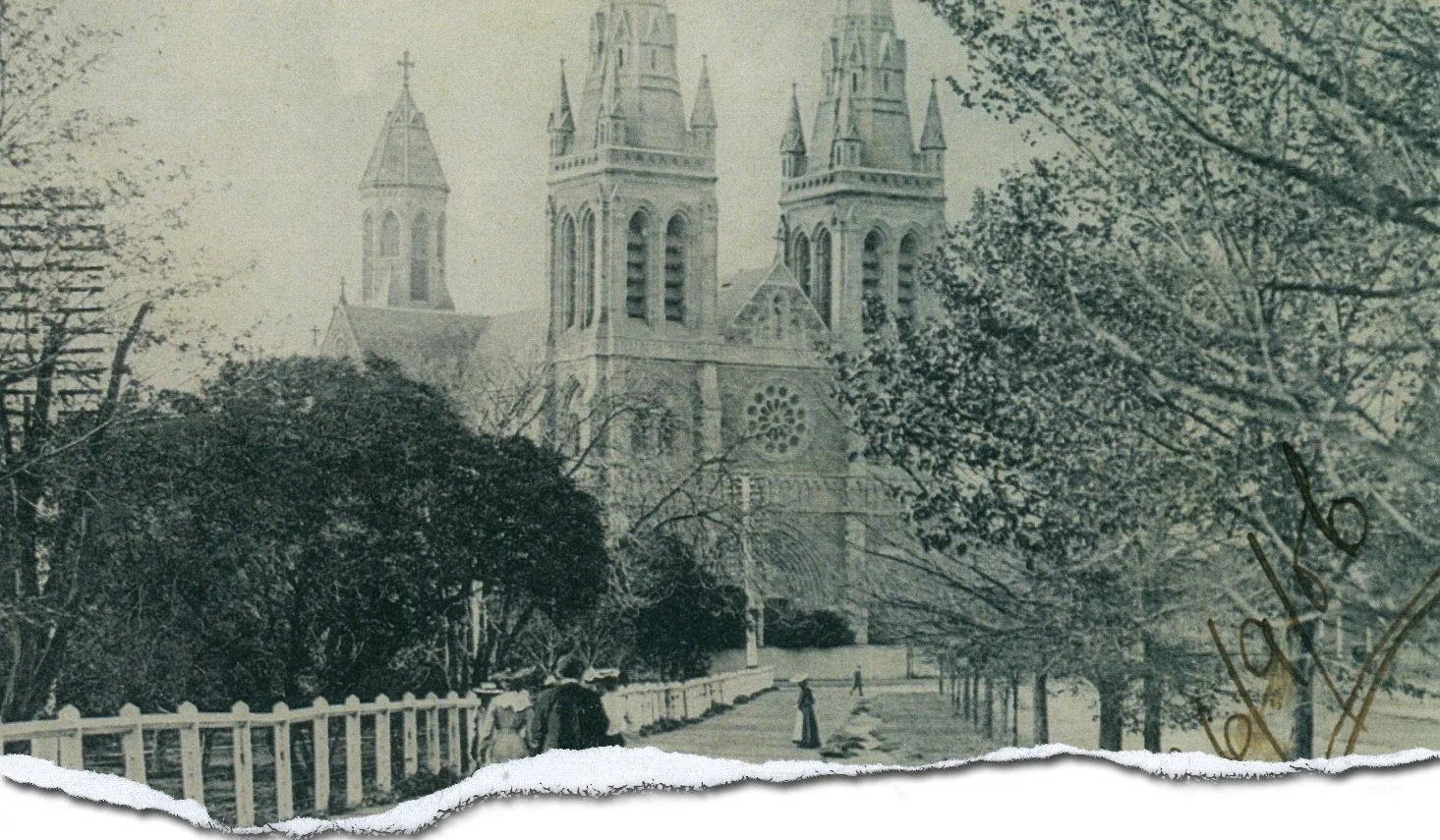
The design of the building passed to local architect Edward Woods, who retained Butterfield’s general design but extended its length and breadth and used local stone instead of the brick. Perhaps Woods’ most significant changes are in the greater influence of French Gothic architecture, with its height and lightness, and the West front, which features a stunning rose window, reminiscent of those found in many famous cathedrals overseas.
Despite financial difficulties, including a recession, construction continued throughout the 19th century, with the nave and towers completed in 1901, followed by the Crypt and Lady Chapel in 1904, when the Cathedral was finally consecrated. The towers and spires, which were the subject of much debate and controversy, were finally completed in 1908.
Work continued over the years, with the installation of a Cathedral-standard pipe organ in 1930, and the hanging of a celebrated ring of 8 bells in 1946.
St. Peter's Cathedral is a beloved landmark in the city of Adelaide, and its rich history is a source of pride for all who call the city home. Its magnificent architecture and beautiful interior continue to inspire awe and reverence, and it remains an active place of worship, with regular services held throughout the week. Whether you are a resident or a visitor to Adelaide, a visit to St. Peter's Cathedral is a must, as it provides a fascinating insight into the history and culture of this beautiful city.
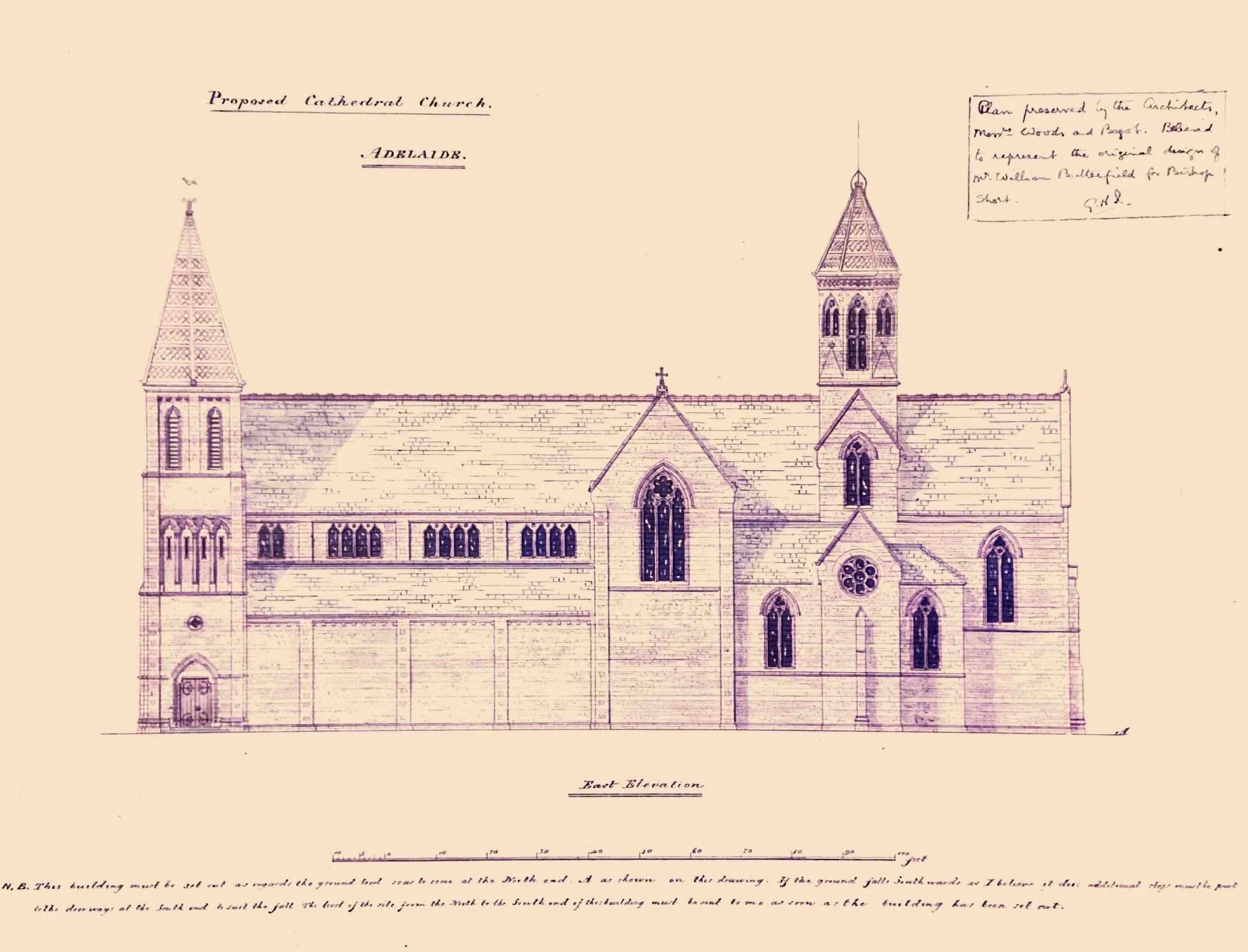
Bishop Short brought with him to Adelaide a plan for a cathedral which had been drawn up by the English architect, William Butterfield. This cathedral was expected to be in the centre of Victoria Square, however the right of the Church of England to build there was withdrawn, so it had to be built elsewhere. The present site was purchased by Bishop Short in 1862
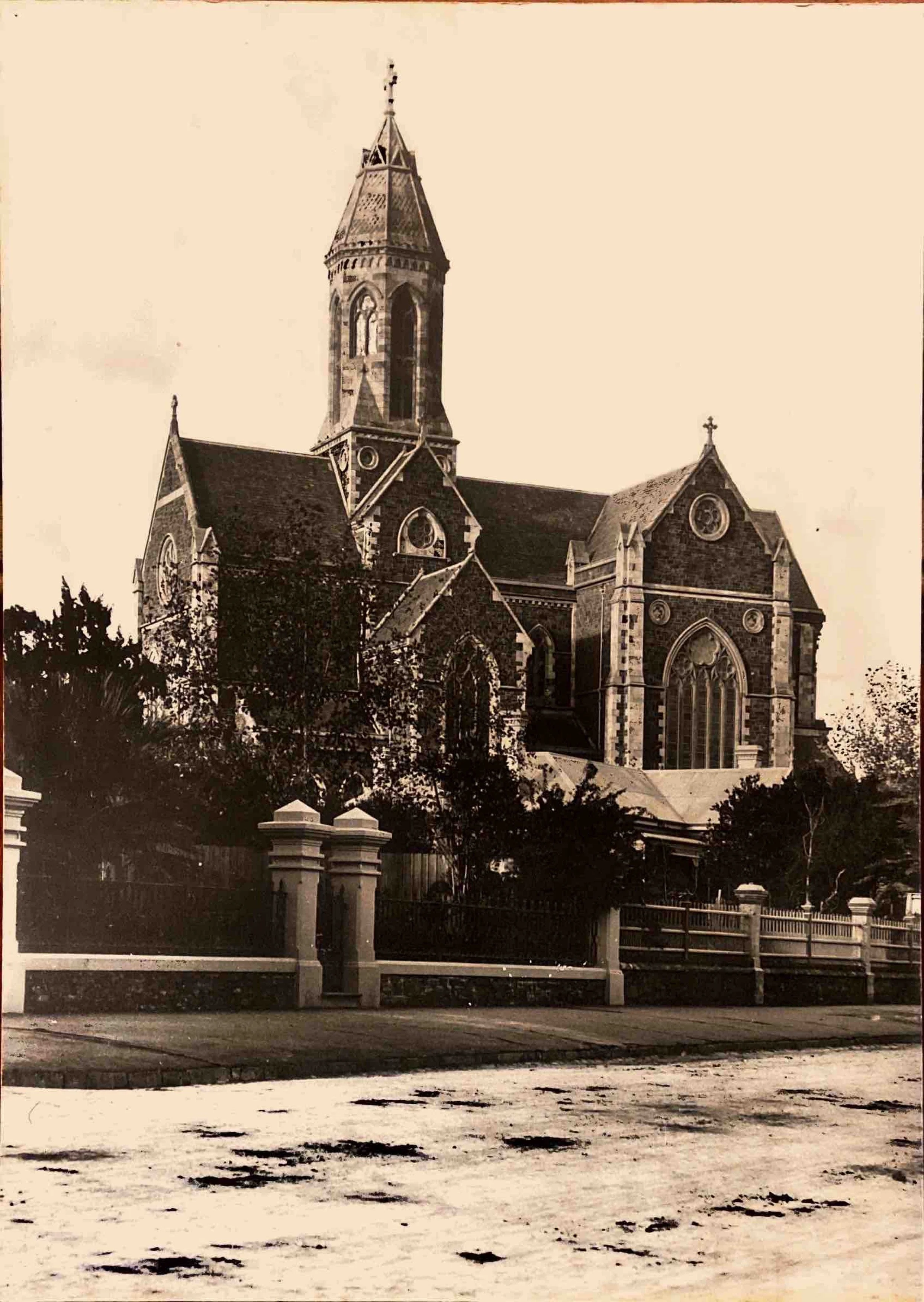
2. Southern Elevation of the Cathedral 1876-1890 - The foundation stone of St Peter's Cathedral was laid on St Peter's Day, 29 June 1869. The first part to be built comprised the current Sanctuary, Chancel, Transepts and the first bay of the Nave. The first service was held on St Peter's Day 1876 and regular services began in 1877. This photograph shows the Pennington Terrace side of the Cathedral.
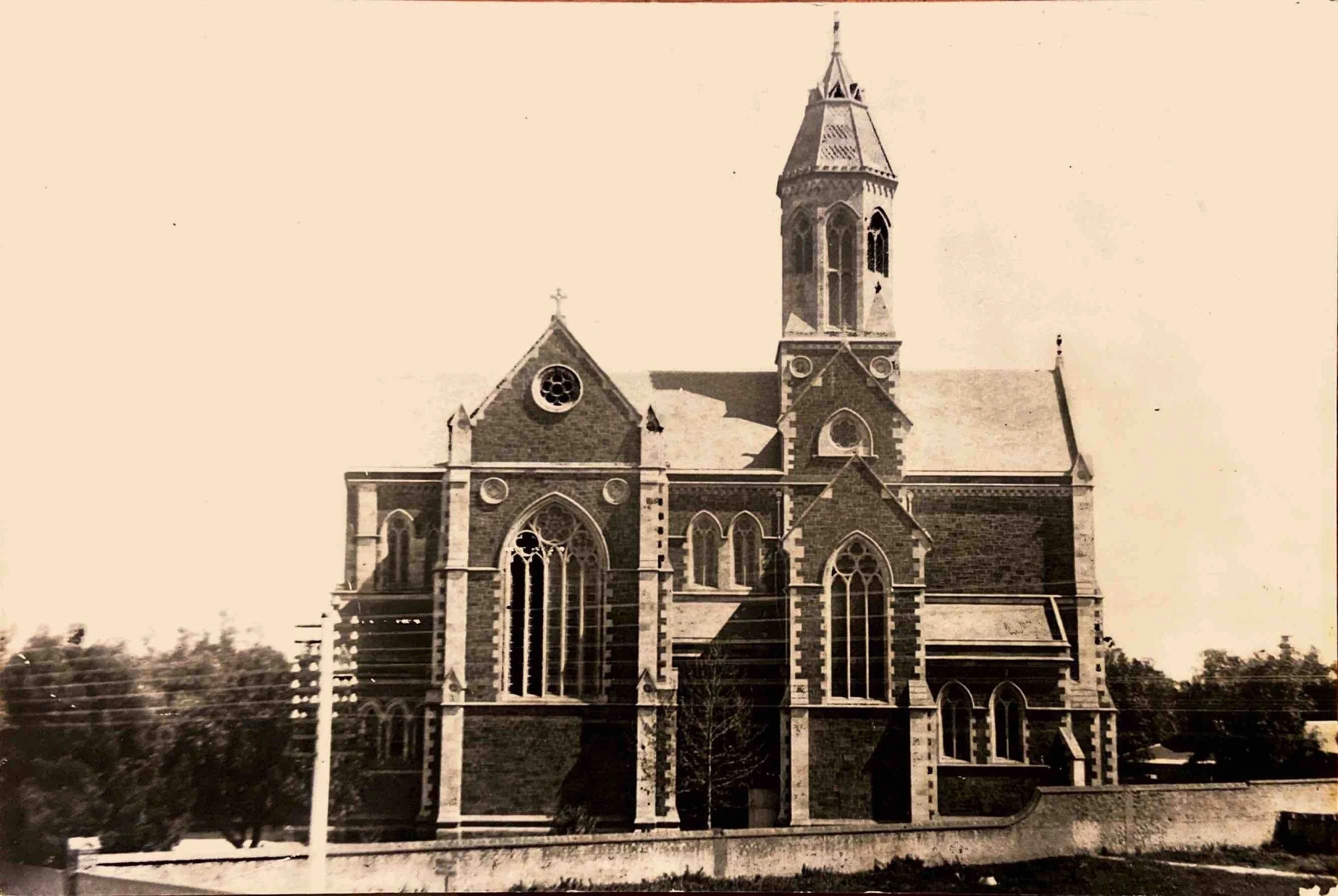
3. Northern Elevation of the Cathedral 1876-1890 - The consecration of the first stage took place on the 1st of January, 1878. This photograph was taken from the other side of King William Road. The St Barnabas Porch below the transept window was added in 1891.
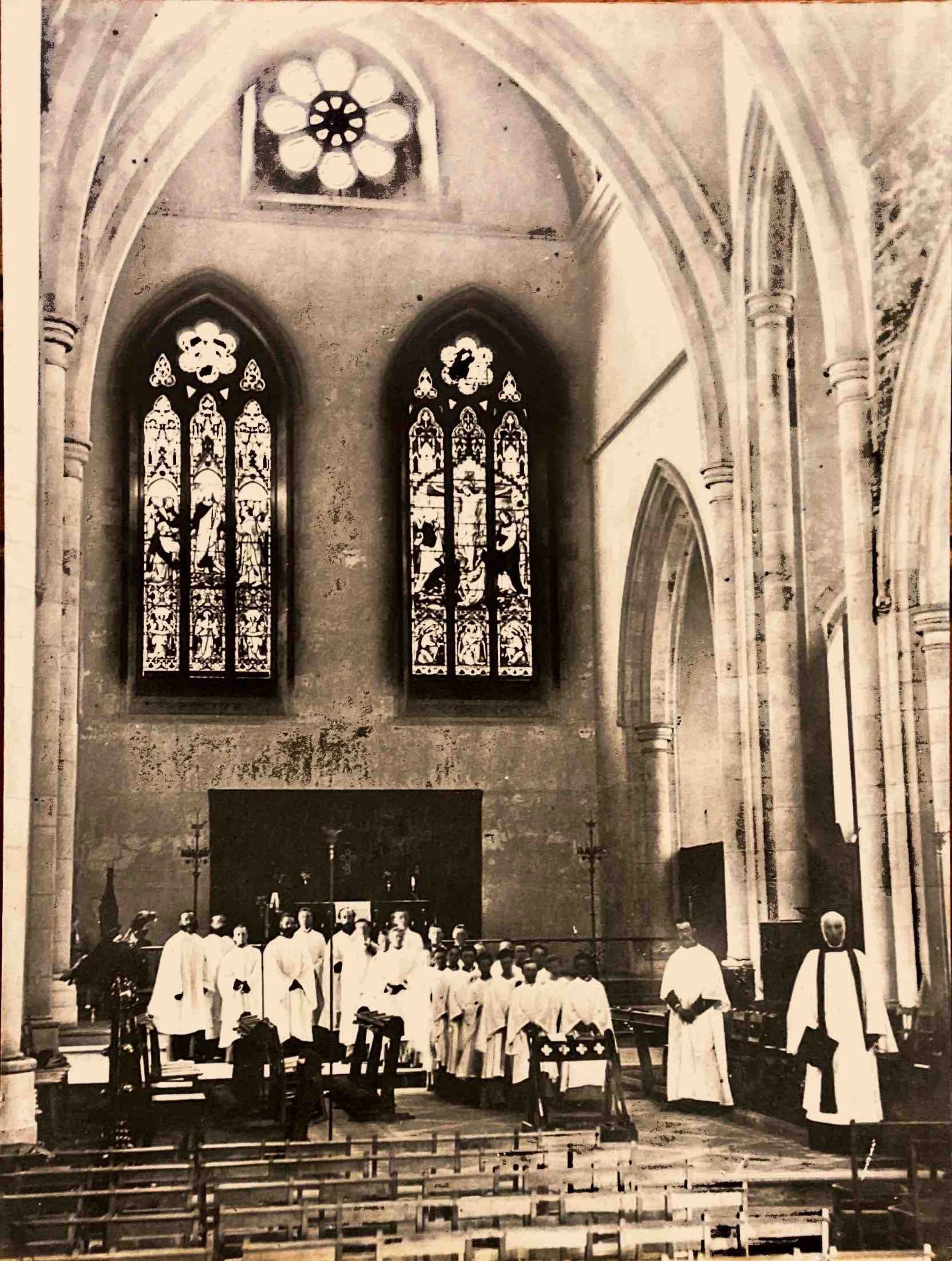
4. The Sanctuary circa 1878 - The choir is standing in the Chancel in front of the altar. The wall behind the altar was demolished circa 1902 when the apse was added. The two stained glass windows were to be given to other churches.
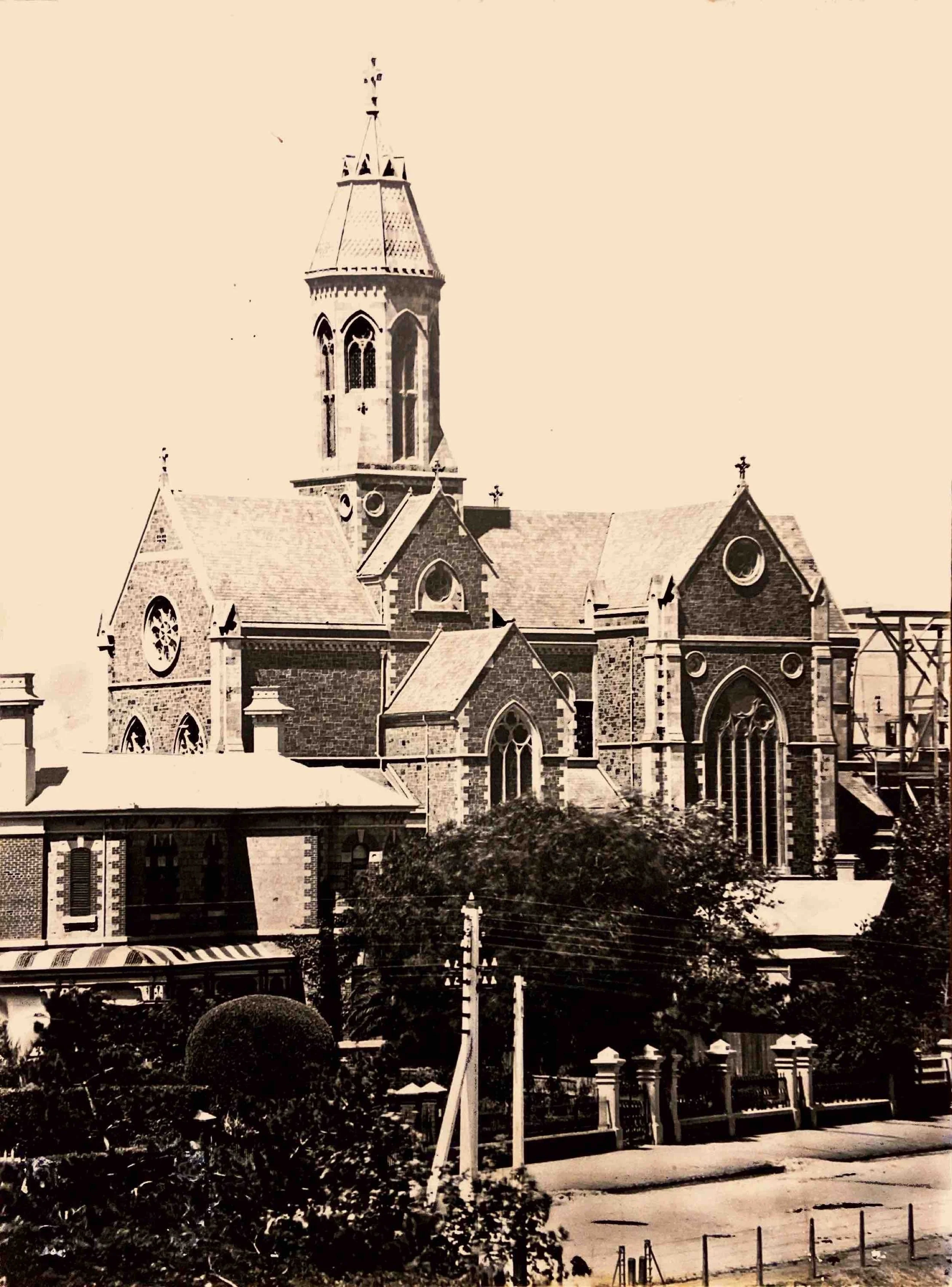
5. Southern Elevation circa 1895 - A view from Pennington Terrace of the gantry in place for the crane used for the building of the next section of the Nave. The cornerstone for the Nave and towers was laid on 27 September 1890.
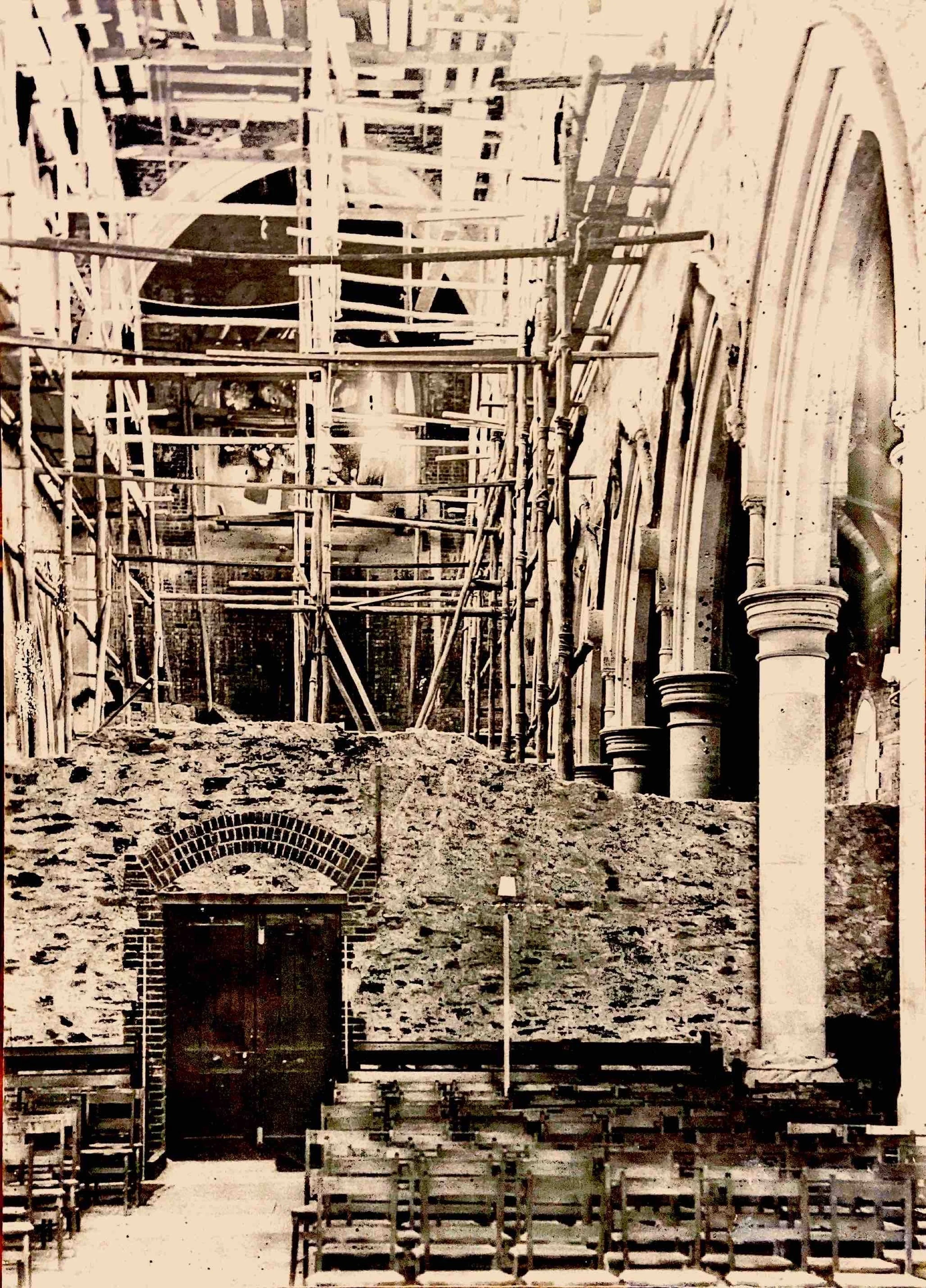
6. The Interior of the Nave circa 1899 - This photo was taken looking towards the current main doors during the extension. The rose window is in place. The new interior walls were built of brick which was then plastered over. The dividing wall was removed 1900.
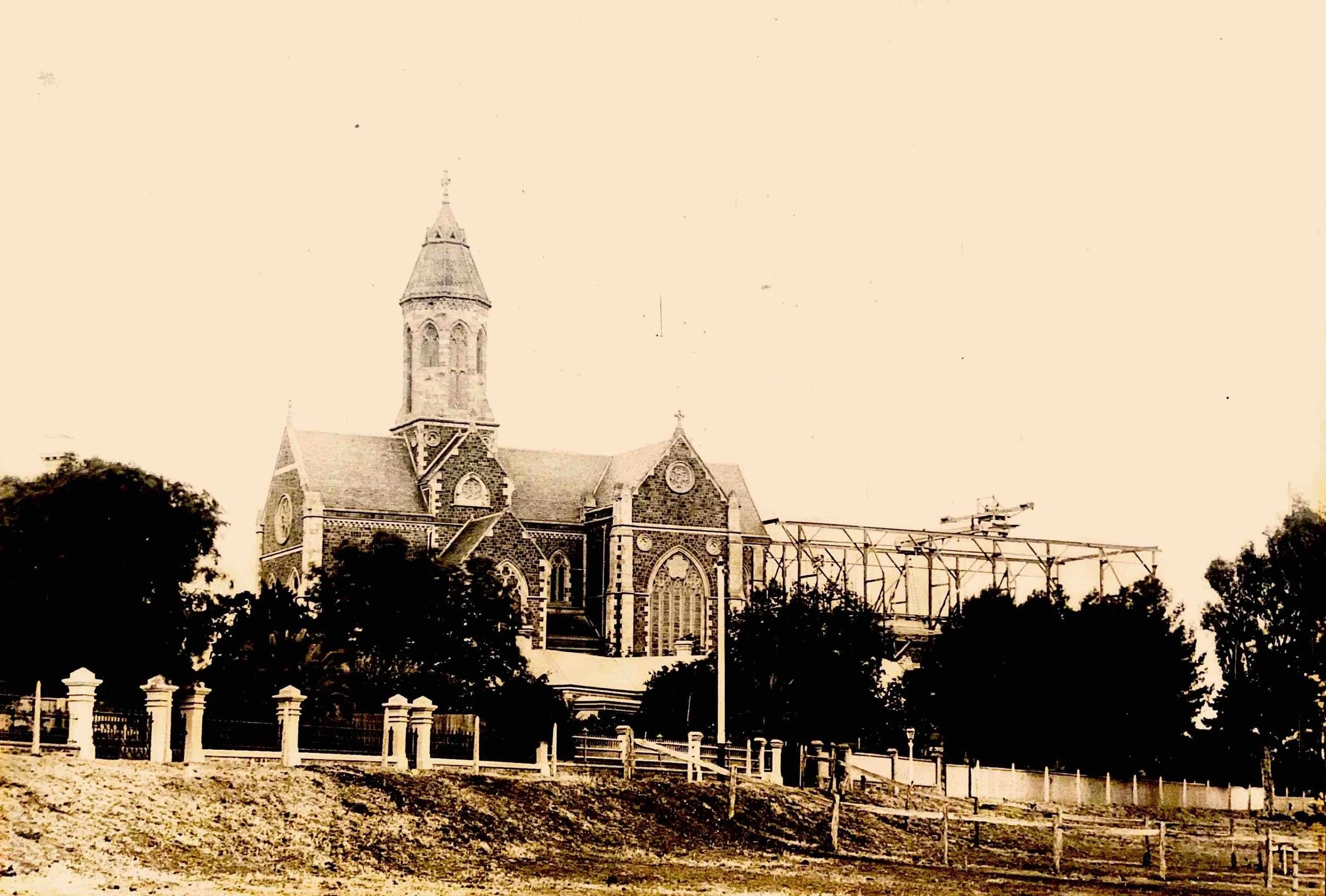
7. The Nave Extension circa 1894 - The gantry with the crane used in building the extension. The first part of the cathedral was built with Tea Tree Gully sandstone similar to that in the General Post Office (now the Adelaide Marriott Hotel) and Adelaide Town Hall.
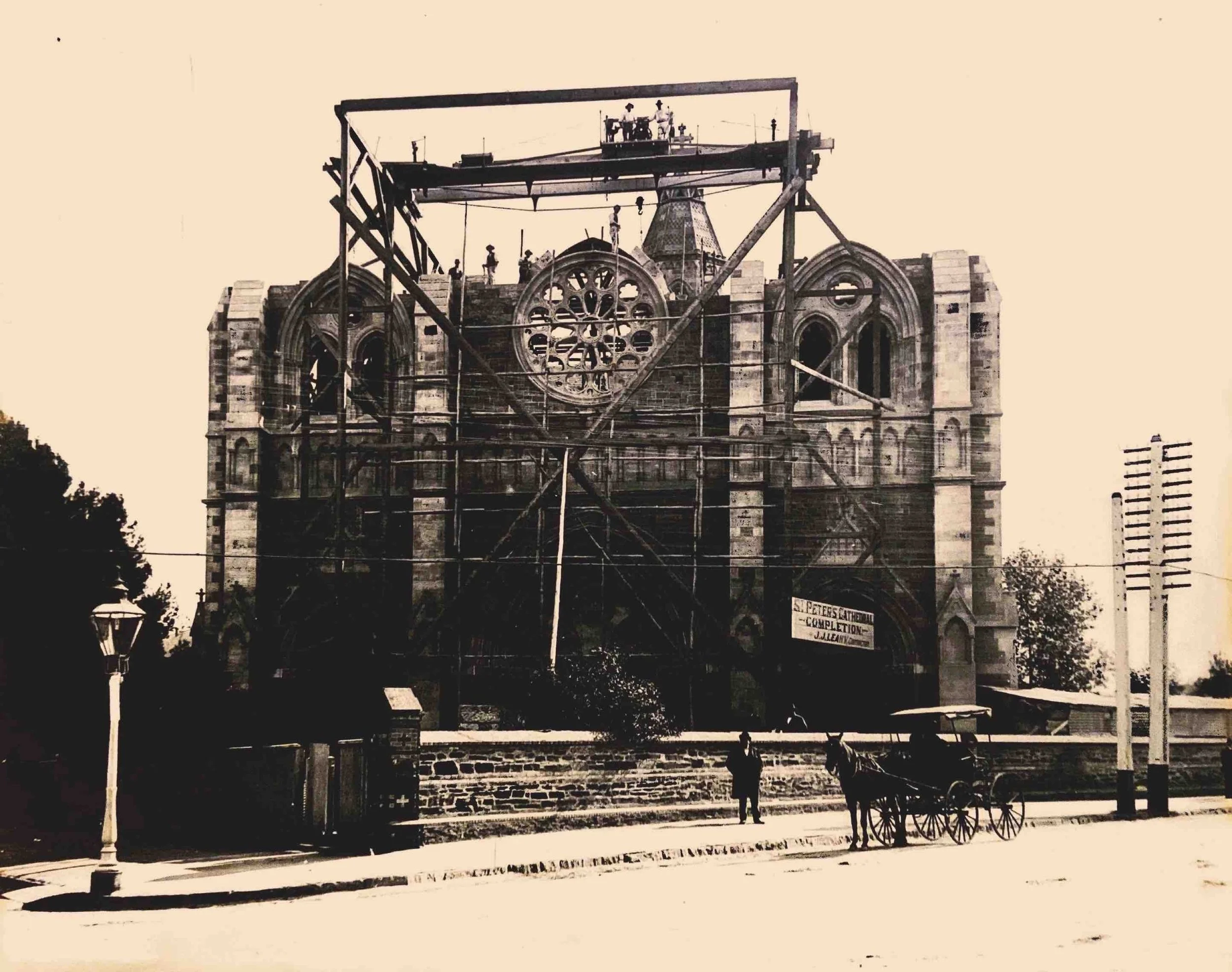
8. The Main Front 1897-1898 - The front of the Cathedral under construction, viewed from the corner of King William Road and Pennington Terrace.
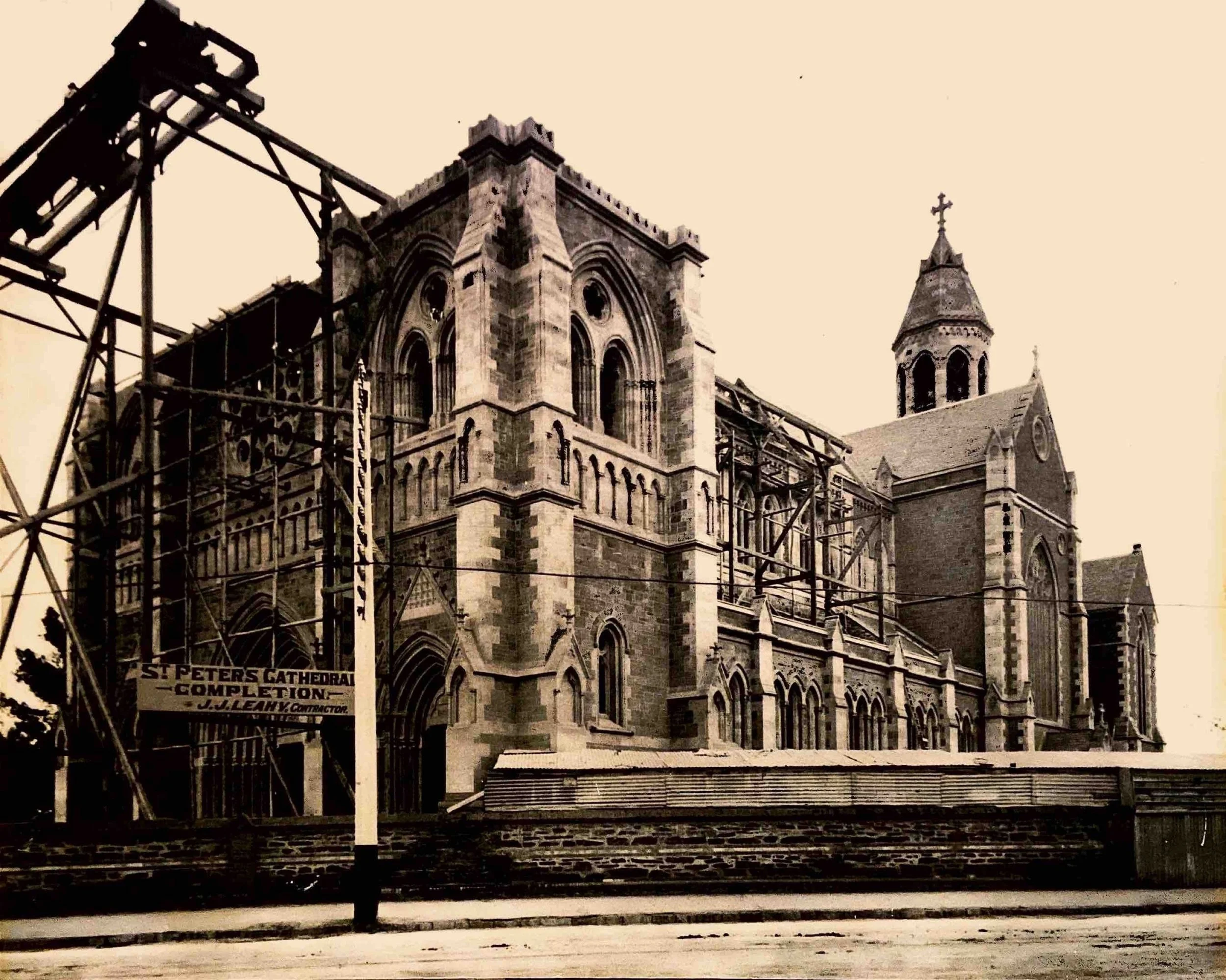
9. The Main Front circa 1899 - Work had resumed on the Nave and towers in 1890. The front of the Cathedral and the Nave extension is nearly complete, viewed from King William Road.
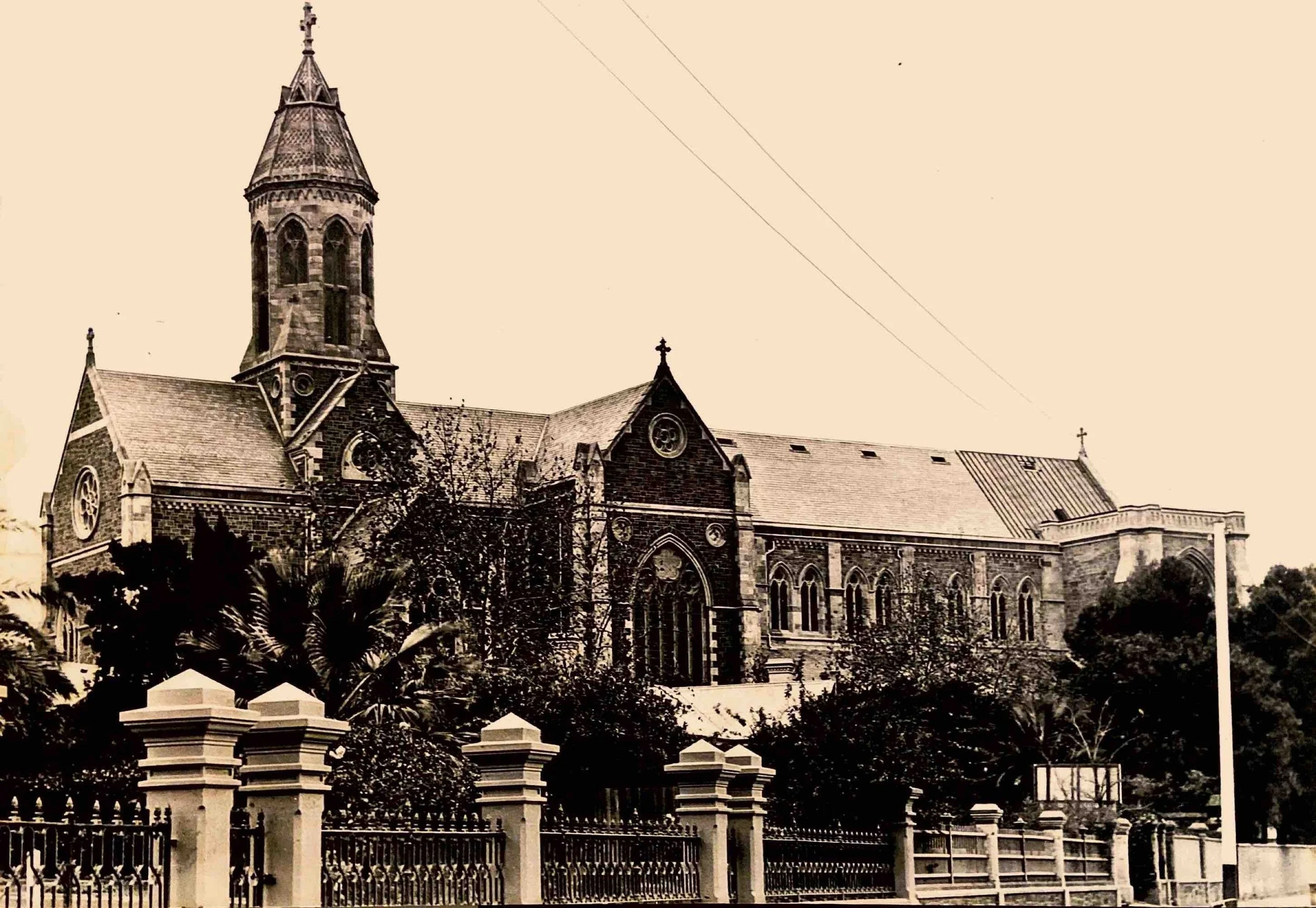
10. Southern Elevation circa 1901 - The towers have been built to the roof parapet height. This view is from Pennington Terrace and shows the roof almost complete.
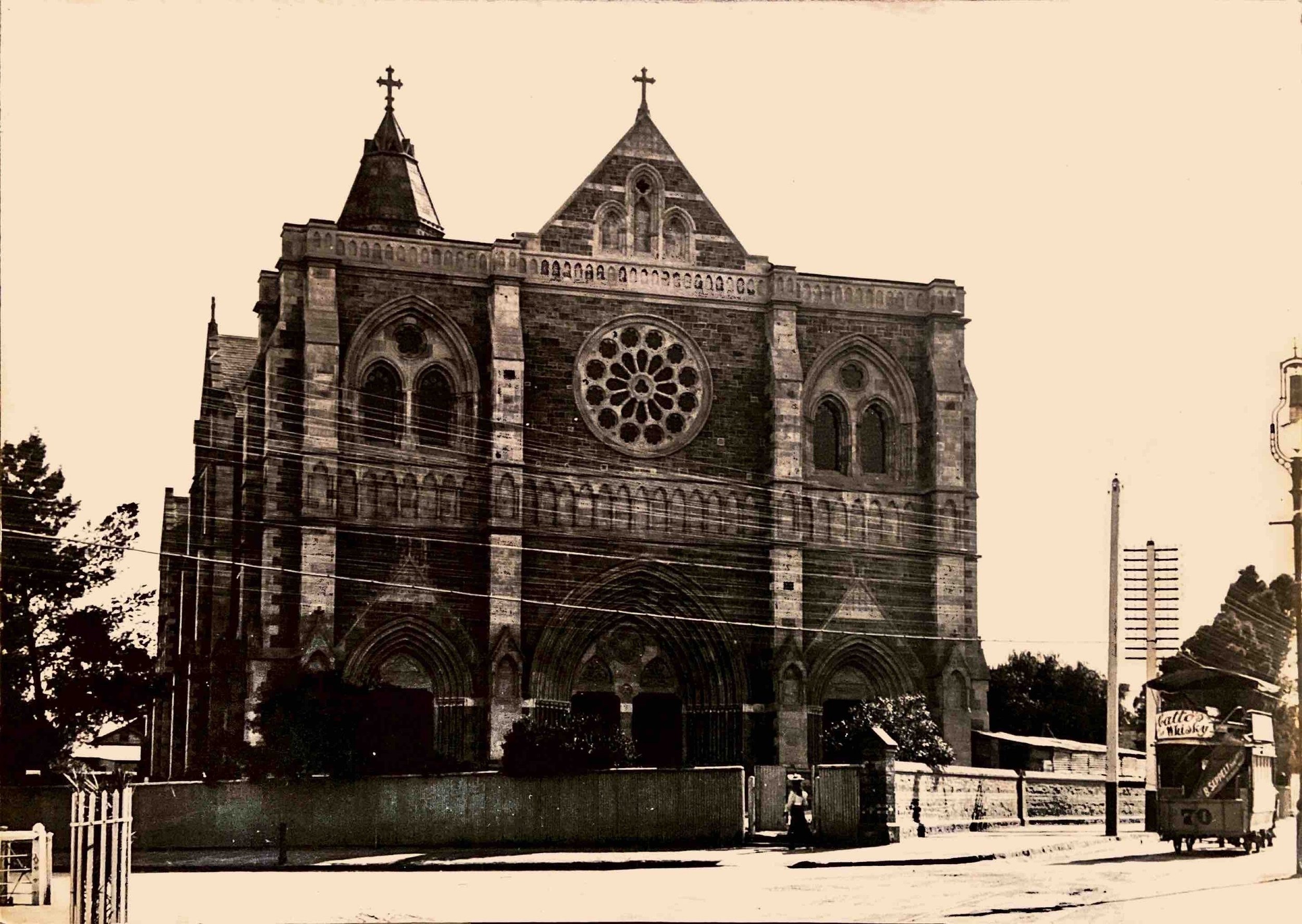
11. The Main Front circa 1901 - The completed front without the towers. The Nave was consecrated on 14 July 1901 in the presence of the Duke and Duchess of Cornwall (later King George V and Queen Mary).
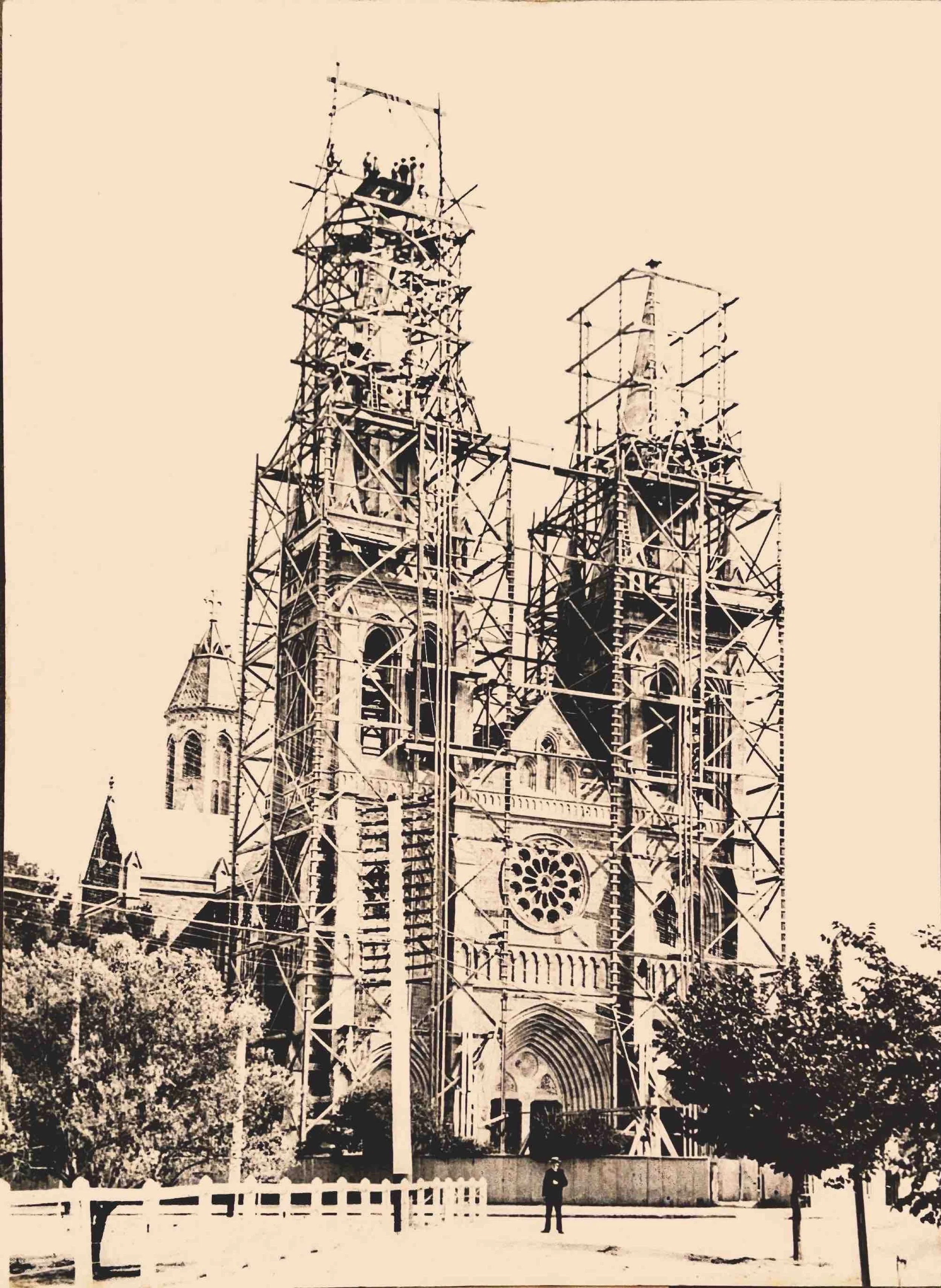
12. The Towers and Spires 1902 - The spires were completed and blessed on 7 December 1902. The workmen on the platform at the top of the western tower seem to be dressed formally, perhaps for a topping ceremony. The cross is faintly visible on the top.