“I hope that the Cathedral will be a centre of union to all the clergy; all have a right to enter its doors, and worship within its walls in spirit and in truth. Can that be other than a season of thankfulness to them? And with that view I invite you to praise the Lord with me.”
Augustus Short at the first Choral Service in the Cathedral
St Peter’s Day, 29 June 1877.
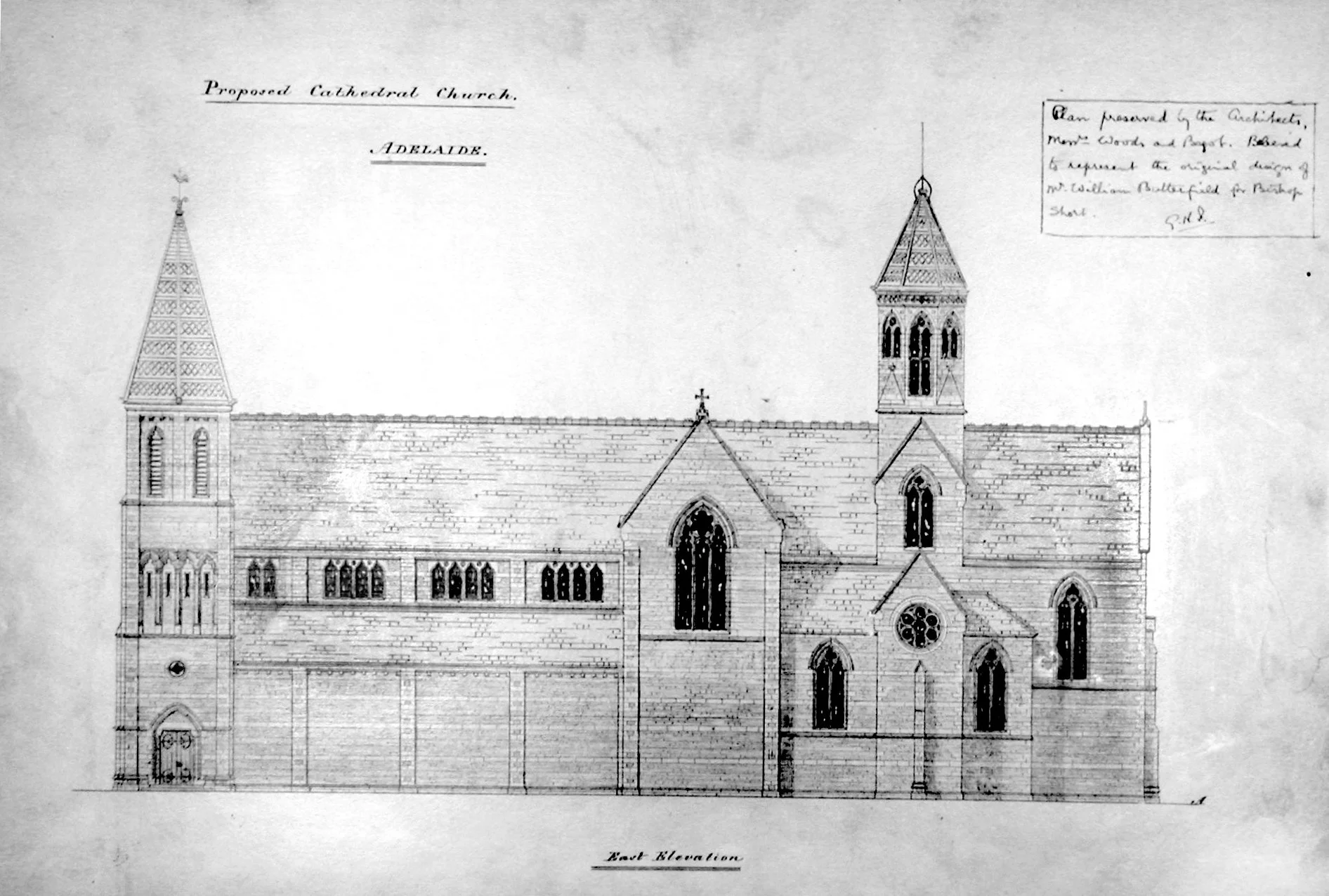
The first plans for St Peter’s Cathedral were prepared by the well-known English architect, William Butterfield. When, however, it was determined to build the cathedral entirely of stone, instead of banded brick as specified by Butterfield, he withdrew. The plans were purchased for £200 and the work placed in the hands of Edward John Woods, a local architect. Woods had recently arrived from England and was only 30 when he took on the design of the Cathedral.
The plans were redrafted to suit the local materials and the size of the building increased. Tea Tree Gully stone was used for the first portion of the building, and Murray Bridge oolitic limestone for the completion of the building.
The Bishop laid the foundation stone in the presence of the Governor, Sir James Fergusson, and a large gathering of colonists on St Peter’s Day, 29 June 1869 - the 22nd anniversary of his consecration. The trowel, which he used on the occasion, is kept in the safe in the Cathedral sacristy.
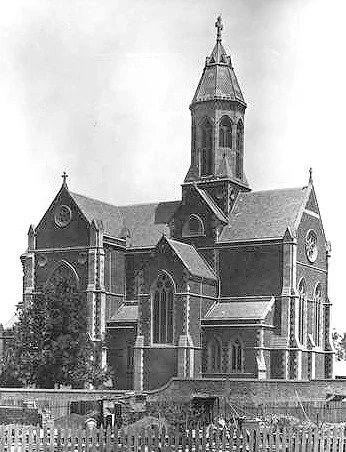
The work of building seems to have gone slowly, and it was not until St Peter’s Day, 1876, that the first service was actually held in the unfinished building. The next was held on April 30, 1877, the evening before Synod, and regular services were begun on May 26, 1877, when 12 wardens were appointed. A very high standard of service has always been maintained by the Cathedral Wardens, and the Cathedral has been a loved charge to them.
The first part of the Cathedral, consisting of sanctuary, choir, transepts, and one bay of the nave was consecrated on the Feast of the Circumcision, January 1, 1878, the preacher on the occasion being Bishop Moorhouse of Melbourne. The cost to that date had been £18,000 and the completion of this part of the building was a great joy to Bishop Short, who retired four years later.
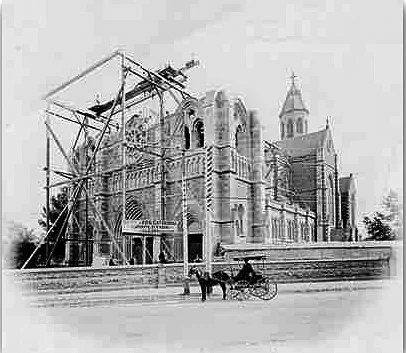
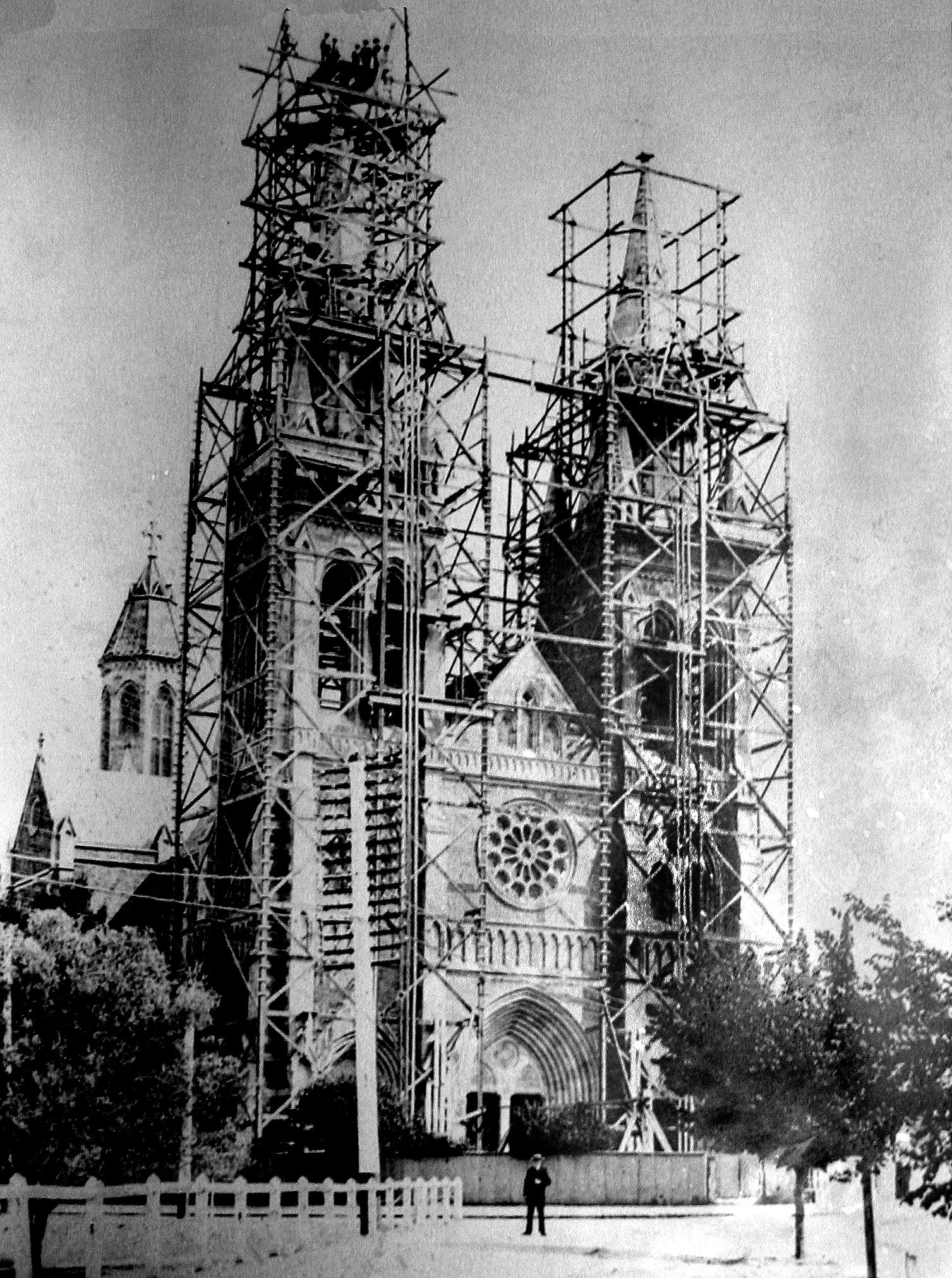
In 1890 a fresh effort was made by Bishop Kennion. The cornerstone of the nave and towers was laid on 27 September 1890 with Masonic Honours by the Earl of Kintore, Governor of South Australia and Grand Master of the local Lodge. Mr. J J Leahy was contractor for the work but in 1894 the available funds were exhausted and work again stopped until 1897. A bequest of £4,000 from Sir Thomas Elder enabled the work to resume, and a gift of £10,000 (around $1.8 million in 2026) from Mr Robert Barr Smith enabled the towers and spires to be built. Mrs Priscilla Simms built the Lady Chapel, and gave the Reredos.
The nave was completed and consecrated on 14 July 1901. The Duke and Duchess of Cornwall and York (later King George V and Queen Mary) were present, and the Duke unveiled the South African War Memorial Tablet near the main entrance. Lord and Lady Tennyson were also present, and Bishop Stretch of Newcastle read one of the lessons.
The towers and the spires were dedicated in 1902, and the Lady Chapel in 1904, so the fabric was thus practically completed when Bishop Harmer was translated to Rochester in 1905. Bishop Thomas arrived in 1906, and in 1911, the front of the cathedral was completed by the erection of the granite steps.